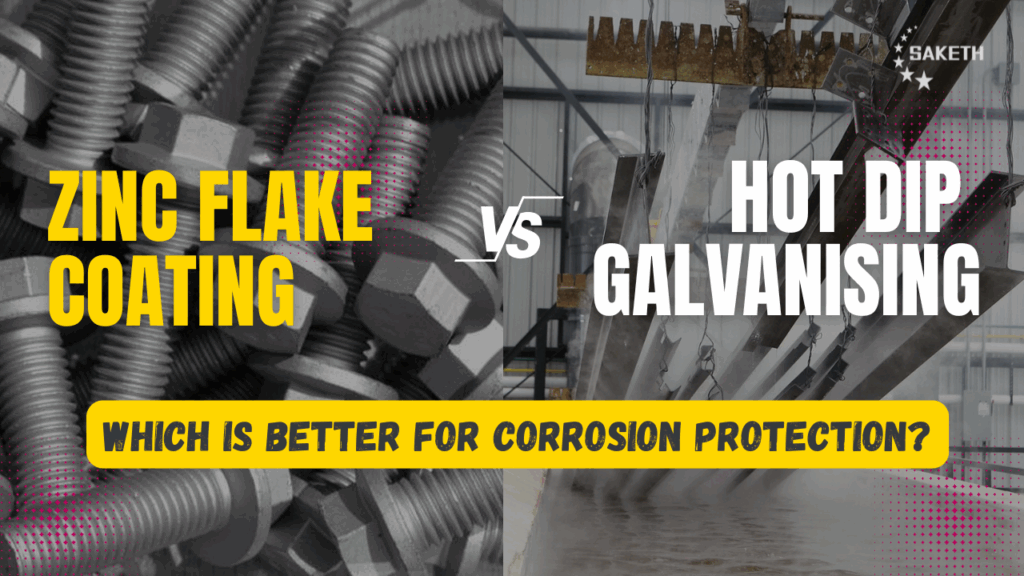
In industries where metal durability and corrosion resistance are critical—like automotive, construction, and infrastructure—the choice of surface coating can make a significant difference. Two popular methods are zinc flake coating vs hot dip galvanising. While both serve to protect metal components from rust and environmental degradation, they differ greatly in their application, performance, and suitability.
In this article, we explore zinc flake coating vs hot dip galvanising, comparing them across key factors such as protection level, application method, temperature resistance, and cost-effectiveness to help you choose the best coating for your project.
What is Zinc Flake Coating?
Zinc flake coating is a non-electrolytic coating process that involves applying a thin film of zinc and aluminium flakes onto metal surfaces. These flakes are typically suspended in a binder, applied using spraying or dip-spin techniques, and then cured at a controlled temperature.
Zinc flake coatings offer high-performance corrosion protection without adding excessive thickness or weight to the parts.
What is Hot Dip Galvanising?
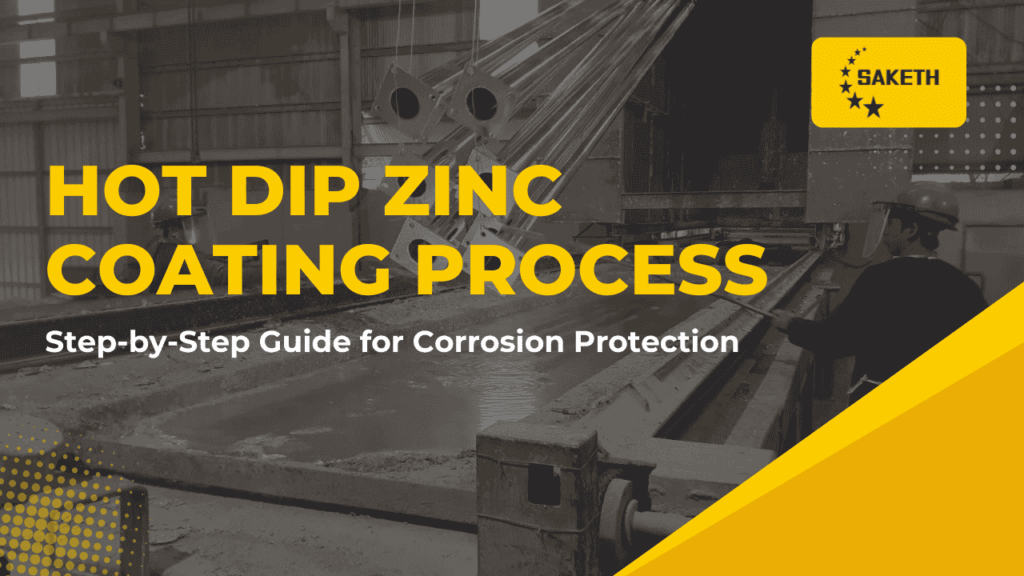
Hot dip galvanising is a process where cleaned steel components are submerged in molten zinc (usually around 450°C). The zinc metallurgically bonds to the steel, forming a protective layer that resists corrosion.
This traditional method has been widely used in heavy-duty industries such as construction, power transmission, and agriculture.
Zinc Flake Coating vs Hot Dip Galvanising: Key Differences
Let’s break down the comparison:
1. Corrosion Protection
- Zinc Flake Coating:
Offers exceptional corrosion resistance—up to 1000 hours or more in salt spray testing without red rust. It’s ideal for automotive fasteners, brake systems, and engine parts where long-term protection is essential. - Hot Dip Galvanising:
Also provides strong corrosion resistance but can show signs of white rust in certain environments. Suitable for large structural steel parts, pipelines, and fencing.
Verdict: Zinc flake coating provides superior corrosion resistance in aggressive environments and for small, high-precision components.
2. Application Process
- Zinc Flake Coating:
Applied through dip-spin, spray, or brush methods at lower temperatures (around 200-300°C). No hydrogen embrittlement, making it ideal for high-tensile fasteners and delicate components. - Hot Dip Galvanising:
Involves dipping in molten zinc, which can result in uneven coatings and is unsuitable for threaded or fine-tolerance components. The high heat may distort thin parts.
Verdict: Zinc flake coating is more suitable for precision parts and high-strength steel.
3. Coating Thickness and Appearance
- Zinc Flake Coating:
Very thin and uniform, typically 5–20 microns. It allows for tight tolerances, and parts maintain dimensional accuracy. Available in various finishes, including silver and black. - Hot Dip Galvanising:
Thicker coating (40–85 microns or more), resulting in increased part dimensions and potential interference in mating parts. The finish is rough and dull grey.
Verdict: Zinc flake coating offers a thinner, more aesthetic finish suitable for engineered parts.
4. Temperature Resistance
- Zinc Flake Coating:
Resists high temperatures—often up to 200°C or more. Specialized versions can withstand up to 300°C, making them suitable for engine and exhaust components. - Hot Dip Galvanising:
Effective up to 200°C, beyond which the coating may degrade or oxidize.
Verdict: Zinc flake coating has better high-temperature resistance.
5. Cost and Economics
- Zinc Flake Coating:
Slightly higher upfront cost due to materials and precision application. However, it reduces rework, rejects, and long-term maintenance. - Hot Dip Galvanising:
More cost-effective for bulk or structural steel components. Lower material cost but less control over finish and precision.
Verdict: Choose hot dip galvanising for large steel structures and zinc flake coating for high-performance, critical components.
Conclusion: Which Coating Should You Choose?
When comparing zinc flake coating vs hot dip galvanising, the decision depends on the application:
- Choose zinc flake coating for:
- High-strength or heat-sensitive components
- Fasteners, brake parts, and engine components
- Superior corrosion protection in compact form
- Automotive, aerospace, and precision engineering
- Choose hot dip galvanising for:
- Large steel structures and frameworks
- Agricultural equipment or construction steel
- Cost-effective corrosion protection at scale
At Saketh Sevvenstar Industries Limited (SSSIL), we specialize in advanced zinc flake coating solutions tailored to meet global automotive and industrial standards. With precision processes and quality assurance, we ensure your components get the protection they need to perform reliably under extreme conditions.