Introduction
When it comes to choosing the right fastener for your project, one of the most common questions professionals face is:
“Should I use stainless steel screws or galvanized screws?”
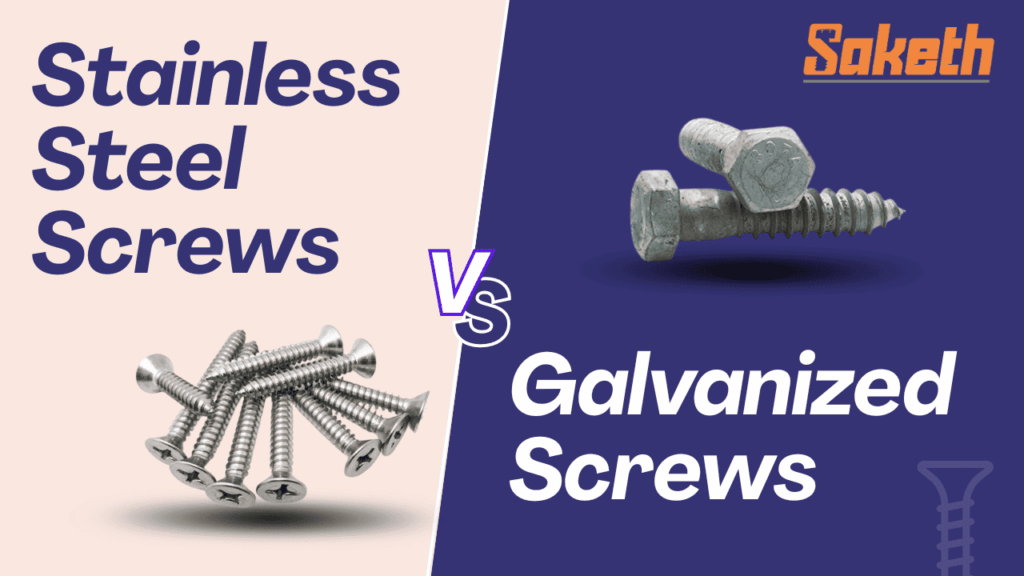
Both types are known for their strength, corrosion resistance, and durability, but they differ in material composition, manufacturing process, and long-term performance. Understanding these differences is crucial to selecting the best screw for your specific industrial or construction needs.
In this blog, we’ll break down the key differences between stainless steel screws and galvanized screws, helping you make an informed choice.
1. Material Composition
The primary difference lies in their base material and protective properties.
- Stainless Steel Screws:
Made from alloys containing iron, chromium, nickel, and molybdenum, stainless steel screws are naturally corrosion-resistant throughout their entire structure. The chromium content (typically around 10–18%) forms a self-healing oxide layer, protecting the metal from rust and oxidation. - Galvanized Screws:
These are usually made from carbon steel and coated with a layer of zinc through the process of hot-dip galvanization or electro-galvanization. The zinc layer acts as a sacrificial coating, protecting the steel beneath from rust.
Verdict:
Stainless steel screws have inherent corrosion resistance, while galvanized screws rely on a protective zinc coating.
2. Corrosion Resistance
- Stainless Steel Screws:
Offer superior resistance to corrosion, even in harsh environments such as coastal, marine, and chemical industries. They don’t rust or lose protection over time because the resistance comes from the material itself. - Galvanized Screws:
Perform well in outdoor environments but can corrode once the zinc layer is scratched or worn off. They are suitable for moderate exposure but not for high-salinity or chemical environments.
Verdict:
For long-term corrosion resistance, especially in marine or humid areas, stainless steel screws are the clear winner.
3. Strength and Durability
- Stainless Steel Screws:
Generally softer than hardened steel but retain strength over time and resist brittleness. They maintain performance even under high-stress or high-temperature conditions. - Galvanized Screws:
Are typically harder and less flexible. However, the zinc layer can wear off under high friction or mechanical stress, exposing the underlying steel to rust.
Verdict:
Choose stainless steel screws for long-term durability and consistent performance.
4. Appearance and Finish
- Stainless Steel Screws:
Have a smooth, shiny, silver finish that maintains its look over time. They’re often preferred for aesthetic applications such as architecture and interior fixtures. - Galvanized Screws:
Appear dull gray or matte due to the zinc coating. They are better suited for industrial or construction settings where appearance is less important.
Verdict:
If visual appeal matters, stainless steel screws provide a more polished and professional look.
5. Cost and Application
- Stainless Steel Screws:
Are more expensive due to their alloy composition and manufacturing process. However, their longevity and low maintenance make them cost-effective in the long run. - Galvanized Screws:
Are more affordable and widely used in general construction, fencing, and roofing, where environmental conditions are moderate.
Verdict:
For short-term or budget projects, galvanized screws work well. For high-performance and longevity, stainless steel screws are the best investment.
6. Ideal Applications
| Application Type | Recommended Screw Type |
|---|---|
| Outdoor & Marine Environments | Stainless Steel Screws |
| General Construction | Galvanized Screws |
| Food & Chemical Industry | Stainless Steel Screws |
| Temporary Structures | Galvanized Screws |
| Architectural Fixtures | Stainless Steel Screws |
Conclusion
Both stainless steel screws and galvanized screws have their advantages, but the right choice depends on your project’s requirements.
If you need corrosion resistance, strength, and long-term durability, stainless steel screws are the superior choice. However, for cost-effective general applications, galvanized screws provide good value.
At Saketh Sevvenstar Industries Limited (SSSIL), we specialize in premium-quality stainless steel screws engineered for performance, precision, and reliability across industries like construction, infrastructure, automotive, and marine.